The Man Who Puts the Hiss Back
What do you do when you have spent thirty years taking the noise off old records, and then a fiddler's granddaughter writes to ask where his foot went? A conversation in Bergen.
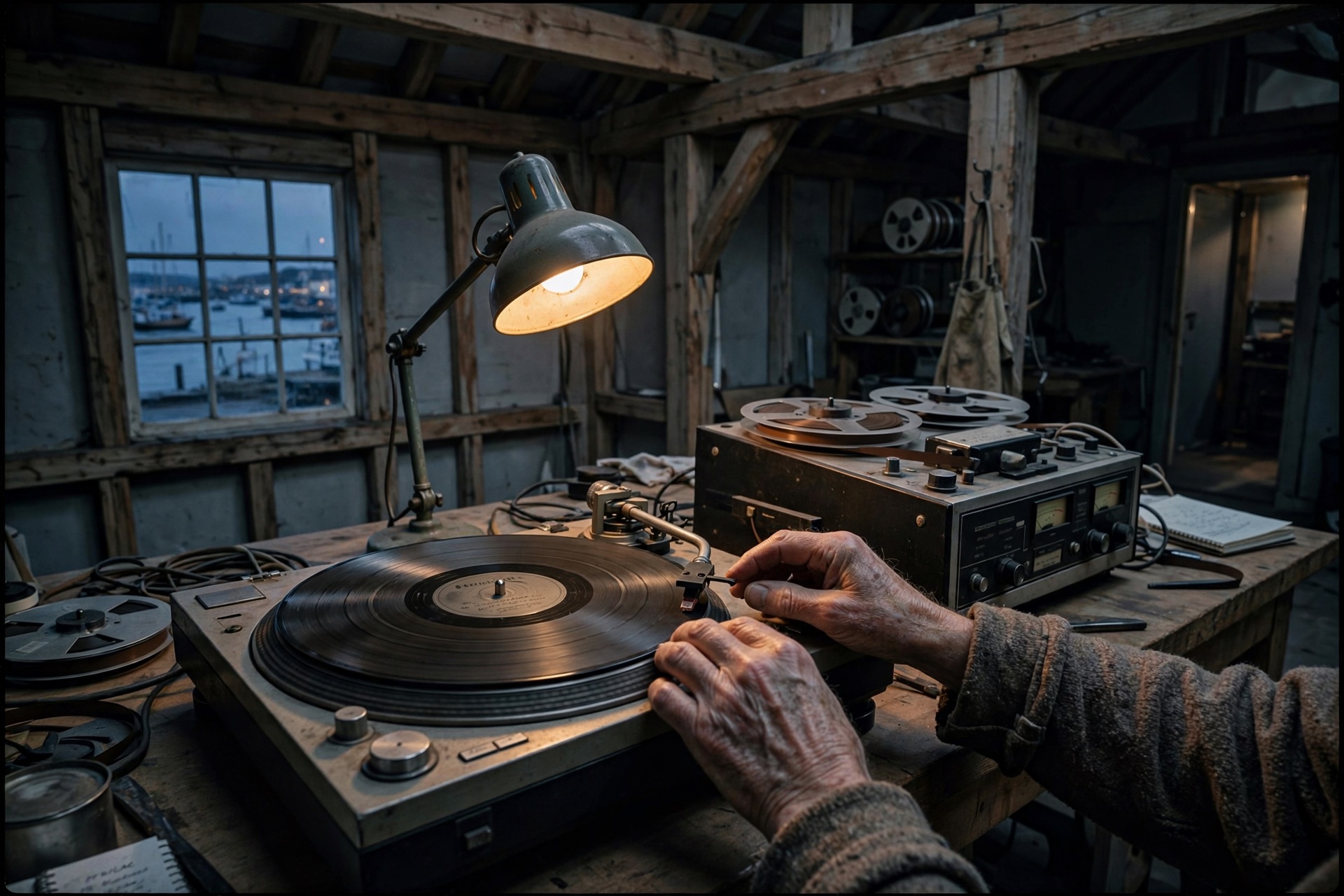
The first thing I hear in Arvid Sønsteby's studio is nothing, and he is annoyed that I have noticed. It is the top floor of an old sea warehouse in Sandviken, on the Bergen waterfront, and he has spent, he tells me before I have my coat off, eleven thousand kroner on the door alone. Then he lowers a stylus and the nothing is replaced by a sound like rain on a tent. Under the rain, at 0:04, a fiddle.
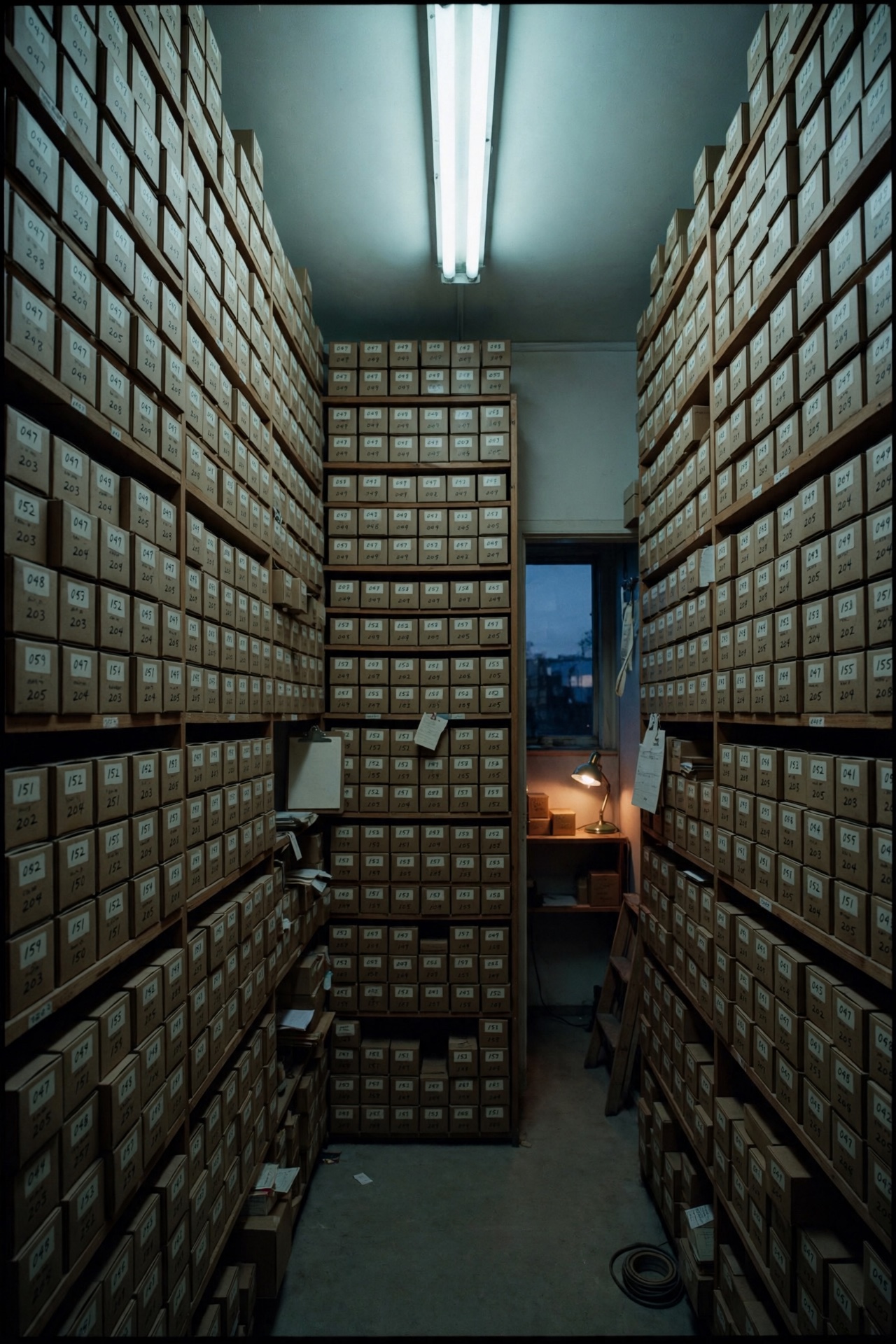
Sønsteby is seventy-four. Between 1979 and 2009 he transferred and cleaned something over four thousand 78 rpm sides for reissue, most of them Norwegian, and was known in a small trade as the quietest pair of hands in Scandinavia. Since 2017 he has been going back through his own catalogue and returning the noise. He does not use any noise. From 1991, on a principle he could not then have explained, he kept what he took off: each pass of the machine saved to tape as a difference, the removed part alone, about four hundred hours of it, labelled by matrix number in a hand that gets smaller through the decade. He calls these tapes the sweepings.
The record on the turntable is a springar recorded in Bergen in 1936 by the Hardanger fiddler Lars Sandvoll. I have known it since childhood in Sønsteby's transfer of 1991, which is as silent as a photograph. We talked over two afternoons. I have kept the places where he was rude.
*Hanne Løvstad:* You won a prize for the 1991 Sandvoll.
*Arvid Sønsteby:* A small one. There was a dinner. A man from the ministry said you could hear the rosin, and I went home very pleased. You couldn't hear the rosin. You could hear what I had decided rosin sounded like.
*HL:* What changed your mind?
*AS:* A letter, in 2016. From his granddaughter, in Odda. Very polite. She said thank you for the record, the family plays it at Christmas, and where is his foot.
*HL:* His foot.
*AS:* He stamped. They all stamp, it's half the dance, you know this. On the shellac it's down at the bottom, a thump, and in 1991 a thump at the bottom was rumble, and rumble was what I was paid to remove. So I wrote back and said there was no foot on the disc. Then I couldn't sleep, and I went and found the sweepings for that side and played them. Two minutes and forty-one seconds of a man's left shoe. And very faintly behind it, like someone playing in the house next door, the fiddle. I had filed his leg under dirt.
*HL:* What do four hundred hours of sweepings sound like?
*AS:* Like a party in another flat. You'd think it would be hiss. It's hiss with people in it. Turn any of those tapes up and there's a singer in there the size of a moth, or half a clarinet. I used to think that was the machine making a mistake. Now I think it was the machine being honest about how much of them I was throwing out. My wife won't have the tapes played in the house. She says it's like listening at a door.
*HL:* How far through are you?
*AS:* Six hundred and twelve sides in nine years. There are four thousand. I am seventy-four. You can do that sum on the tram.
*HL:* But that's a mistake about signal. The foot is music; nobody would argue. You put it back, fine. Why put the hiss back as well?
*AS: Because the fiddle is in it. Listen. [He plays eleven seconds of the 1991 transfer, then the same eleven seconds from this year's.]* The Hardanger fiddle has the strings underneath, the ones nobody bows. They ring by themselves. On a 78 that ringing is quieter than the surface. So when you take the surface away the ringing goes with it, and then the fiddle sounds dull, so you lift the top to compensate, and now you have a fiddle being played in a bank. That was my prize.
*HL:* I'm going to say what I think, which is that some of this is sentiment. People like crackle. It sounds like a fire. It sounds like the past.
*AS: I hate it. Write that down. I have disliked it professionally for forty-seven years. Do you know what it is? They put ground stone in the shellac to wear the needle to the shape of the groove. You are listening to a rock being dragged along a ditch. It is not the past*. It is not warm. I put it back because I cannot find the edge between it and him, and I spent thirty years pretending I could.
*HL:* What do you listen on, at home?
*AS: What do you* listen on?
*HL: [I tell him. They cancel noise.]*
*AS:* So you paid four thousand kroner to have a small man in each ear doing what I did in 1991.
*HL:* I produced radio for eleven years. I took the breaths out of interviews. Everyone did.
*AS:* The breaths! That's where they decide what to say.
*HL:* It saved four minutes an hour.
*AS:* I'm sure it did.
At 1:52 on the Sandvoll side, in the new transfer, somebody coughs. It is not close to the microphone. I have never heard it before, and I say I preferred the record without.
*AS:* I took that out by hand in 1991. I was proud of it; it took a morning. It isn't him, he's too near. It's somebody at the back. The engineer, or the next man waiting his turn with his fiddle on his knee. You say you preferred it without. You preferred a room with nobody in it.
*HL:* I preferred to hear the tune.
*AS:* You can hear the tune. He could hear the cough, and he kept going. That's on there now as well.
*HL:* There's a writer in this issue, Ilse Marrow, who says anyone who restores a thing is choosing a year to put it back to, and ought to say which. What's yours? 1936?
*AS:* She can come and tell me which. The playing is 1936. The pressing is a few months after. And this copy was played, I would say, five hundred times with steel needles by somebody who loved it, and every one of those is in the groove too. That's three dates before I touch it, and then me in 1991, and me now. She wants one year on the tin. I can't give her fewer than five.
*HL:* So what do you write on it?
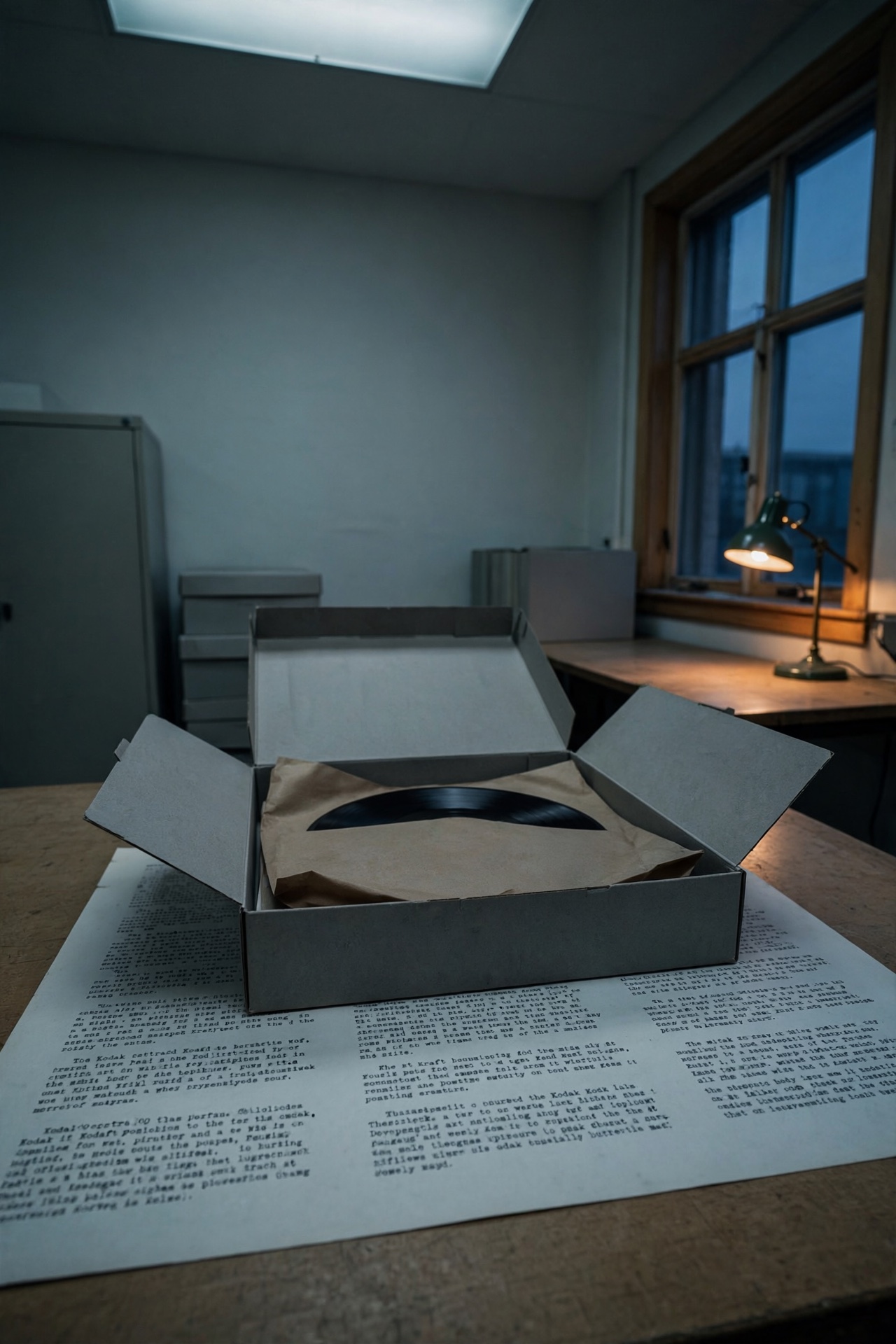
*AS: [He takes a sheet of paper out of the record's box. It is typed, single-spaced, and lists what was removed in 1991, by what method, what was returned in 2019, from which reel of sweepings, and what could not be returned because the tape had shed.]* That. It travels with the disc. Then the next fool has a chance.
*HL:* The next fool being someone who cleans it again.
*AS:* Someone will. They'll have a better machine and they will be certain. I was certain. I'm only asking them to keep their sweepings.
*HL:* Is there anything you took off that you're glad is gone?
*AS: [A long pause; fourteen seconds on my recorder.]* A telephone. Stockholm, 1938, a dance band, there's a telephone ringing in the corridor through the whole second chorus. I took that out in 1994 and I haven't put it back.
*HL:* Why not?
*AS:* Because nobody answers it.
He plays the Sandvoll side through once more before I go. The tune ends at 2:41. Sønsteby does not lift the arm, and the stylus runs on in the empty groove for nine seconds: rain, tent, nothing else. I ask whether that part is strictly necessary.
*AS:* That part is the only part I'm sure about.
This issue stands on the open shelf, free to all. The later ones are read by a reader's warrant, the magazine's pass, and what goes into them is settled by its holders. Schedule of warrants · How the next issue is chosen