She Has Apologised for Every Late Train to Bodø Since 1987
Ten hours up the Nordland Line with Gunvor Aasland, who read some lists into a microphone in 1987 and is still, most mornings, telling northern Norway that she regrets the delay.
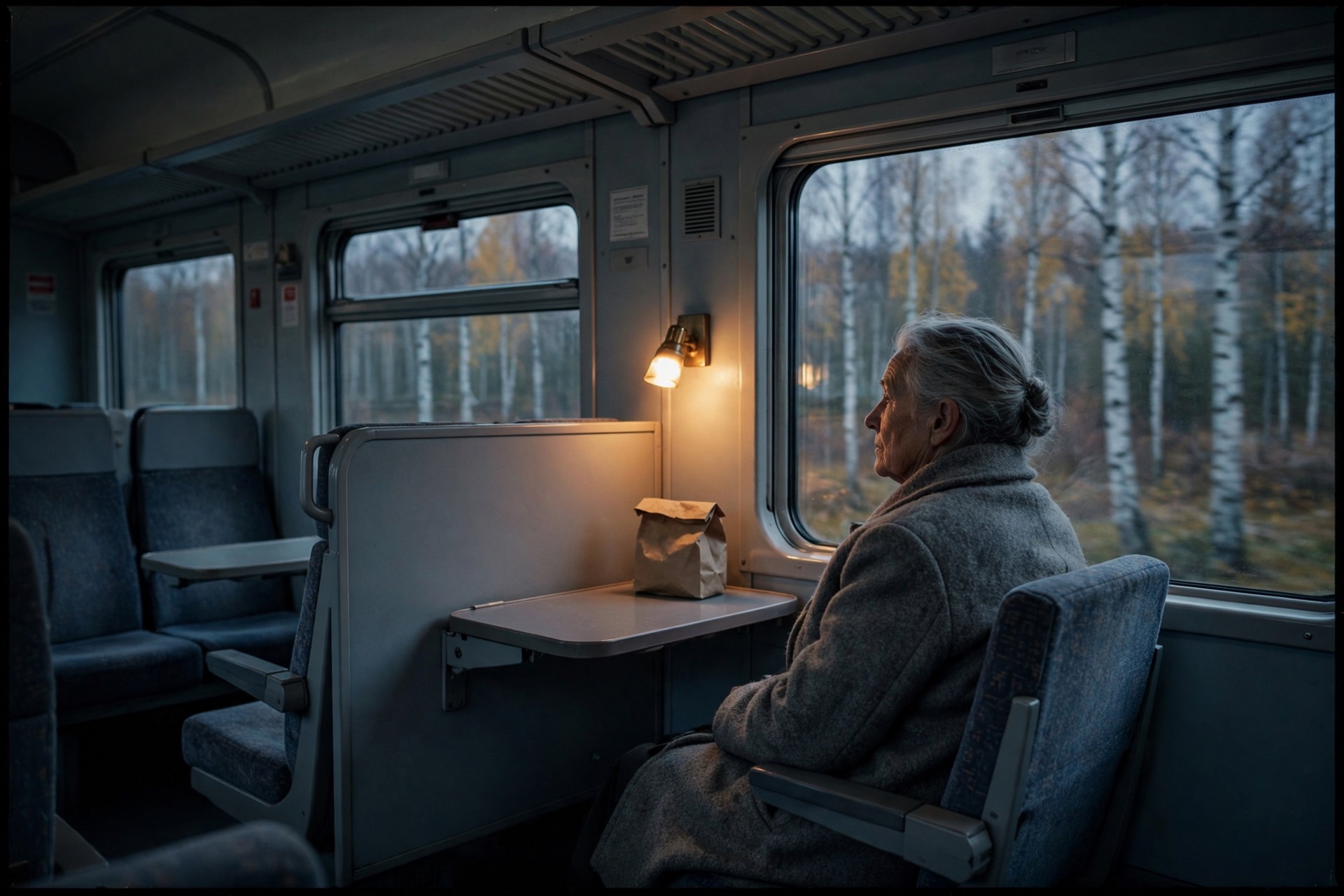
Gunvor Aasland takes the window seat that faces backwards, because, she says, she prefers to see what she is being sorry about once it is over. It is a Tuesday at the end of October. The morning train from Trondheim to Bodø is nine minutes late leaving, and a calm woman in the ceiling has just said so. Aasland, who is seventy-five and is eating a cinnamon bun out of a paper bag (39 kroner, the station kiosk), does not look up.
"That's a good one," she says. "That nine is from the second day. I'd had soup."
The voice in the ceiling is hers. In March 1987 a firm that built announcement systems hired her, then an announcer on radio in Trondheim, to spend four days in a studio reading lists: every station on the line, the numbers from nought to fifty-nine, the hours, the platforms, and forty-one reasons why a train might not be where it should, among them signal failure, snow, a landslide and reindeer on the line. She was paid 6,000 kroner and, on the last day, given a cake. The Nordland Line runs 729 kilometres, crosses the Arctic Circle on the Saltfjellet plateau and takes about ten hours from end to end. For thirty-nine years every delay on it has been announced by a woman of thirty-five who had had soup.
I am riding the whole of it with her, which she does about once a year, "to check on myself". I have a notebook and a plan to count the apologies. By Steinkjer, two hours out, I have three.
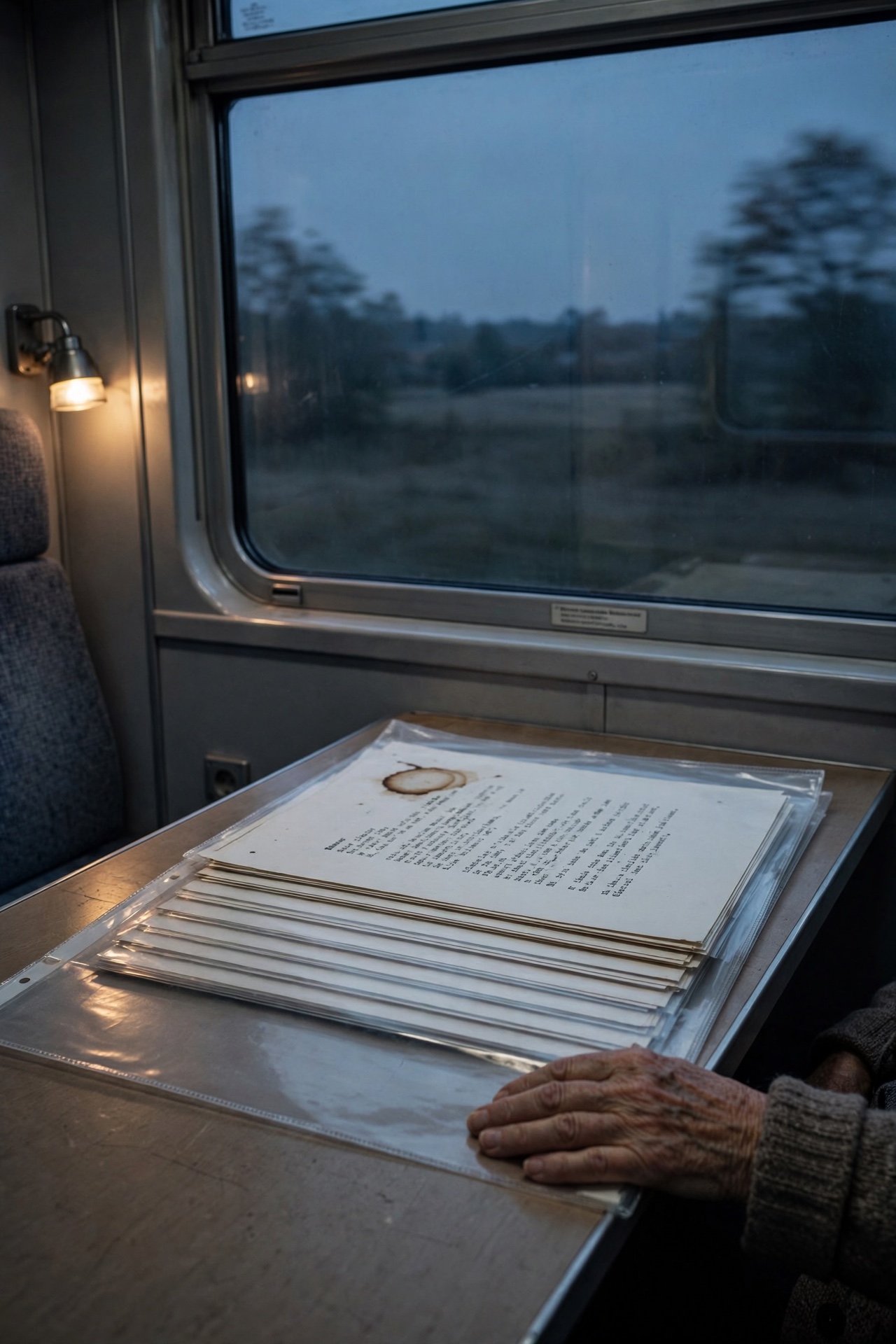
It helps to know how she is made. In 1987 the machine played whole phrases, exactly as she had read them. In 2004 it was replaced by one that cut the tapes into words and pieces of words and assembles them fresh each time, and that is when she began to say things she had never said. She shows me the reading list, which she has brought in a plastic sleeve: eleven typed pages, a brown ring on page four. Nobody in 1987 asked her for the word sixty, since no hour has a sixtieth minute. So a train that is an hour late is announced as fifty-nine minutes late, and then, after a pause in which you can hear the machine thinking, one minute more. Nobody asked her for minute in the singular either. For twenty-two years she has been telling northern Norway that a train is delayed by one minutes.
"I taught school before the radio," she says. "I taught grammar."
The cutting is not what troubles her most. The thing she would like back is the apology. The phrase is vi beklager, we regret, which is what an institution says; it is not the word you would use if you stepped on someone's foot. In 1987 a man in a brown cardigan, whose name she never learned, asked her to read it neutral. She read it fourteen times. They chose the third take, in which, by her own account, she is thinking about whether she left the car unlocked.
"Listen," she says, somewhere short of Grong, when a freight train coming south has put us eleven minutes down. The ceiling regrets it. "There. You hear? She isn't sorry. She's wondering about the car."
I listen. I have to report that she sounds sorry to me, and I say so. Aasland looks at me the way I imagine she once looked at children who had not done the reading.
Nobody knows her face. She has tested this. In four decades she has been recognised by sight once, by a man who turned out to have mistaken her for his dentist. Her voice is another matter, and she has learned to ration it. In the bakery near her flat she points. If she asks the time on a platform, people check the departure board. Her late husband, Leif, drove this line for thirty-one years and liked to say he had never once made her say it, which she tells me was a lie, and that she had the dates.
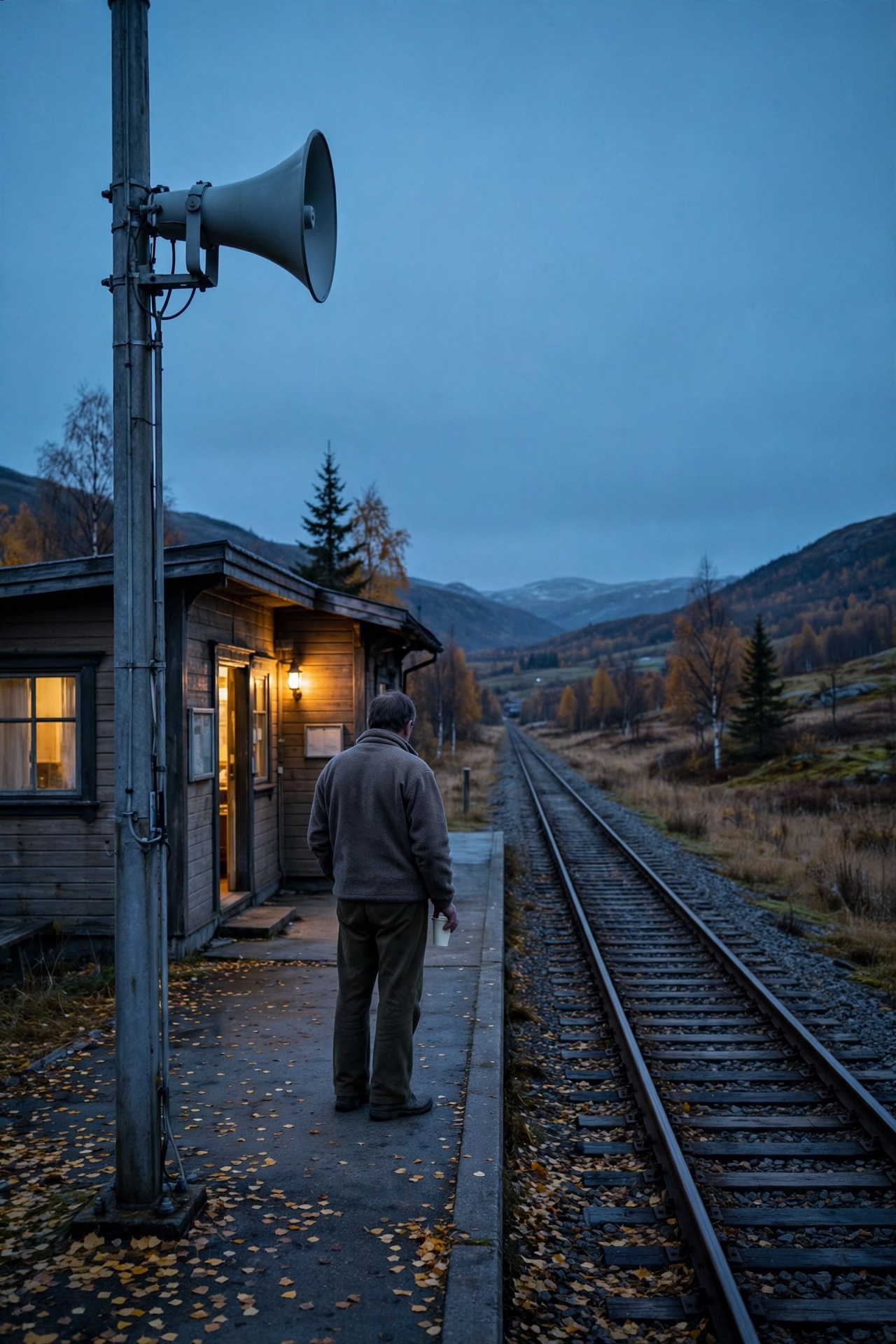
At Mosjøen we stop and do not start again. A points failure, the ceiling says, and regrets it. Eighteen minutes, then twenty-six, then, the machine having thought about it, fifty-nine minutes and one minutes more. (The machine is a pessimist. We will be gone in thirty-four.) The carriage has the particular quiet of people doing sums about connections. Aasland gets out to stand on the platform, because she likes to hear herself in the open air, where she says she sounds taller. The loudspeaker is a grey horn on a pole. Each time it regrets, she nods slightly, like someone hearing her name read from a list.
A man in a fishing-company fleece is standing under the horn with a coffee. On the fifth apology he looks up at it and says, not loudly, "It's all right, love. It's not you."
Aasland does not introduce herself. She has a policy. But she goes pink to the hairline and has to walk to the end of the platform and look at a signal for a while. When she comes back she says, "That's the third time someone's said that. The first was 1993. I keep a note."
She does. It is at the back of a pocket diary, under a heading that says only Kind, and it has three entries in thirty-three years.
By Mo i Rana I have counted eleven apologies. She has by her own estimate been personally sorry for two: the first, on principle, and the one at Mosjøen, because of the man.
Next year she stops. The company that supplies the announcement system has told her, in a letter she describes as very decent, that it will be replaced in 2027 with a synthetic voice that can say any word in any order, including sixty, and will not need her. They offered a dinner. She asked for something else. She asked to come into a studio for one hour and record the apology again, properly, so that for the last few months the line would at least be told it by somebody who meant it. They wrote back that the present system cannot take new material, and that they regretted it.
"Beklager," she says. "They used my word."
We cross the Arctic Circle at dusk, on the plateau, where there are two stone markers beside the track and otherwise only our own carriage coming up in the glass. The conductor announces it himself, in his own voice, and is rather pleased about it. The ceiling says nothing. Nobody asked her for the Circle. She tells me that what she would really have liked, if they had let her into the studio, was not vi beklager at all but unnskyld, which is the ordinary word, the stepped-on-your-foot word. She has practised it. She does it for me over the table, once, quietly, in the voice, and two people across the aisle look at the ceiling.
There is a man in Bergen, interviewed elsewhere in this issue, who believes that what gets cleaned off a recording should be given back. I mention him. She thinks it over through most of Saltdal.
"He's welcome to the soup," she says. "I'd like the car taken out."
The train makes up time on the long run down to the coast, as she says it sometimes will, and at Fauske we are nine minutes behind, and after that the gap closes without anyone remarking on it. We come into Bodø four minutes early. The doors open onto cold and the smell of the harbour. I wait for the ceiling to say something, and it doesn't, and I look at her.
"I never recorded early," Gunvor Aasland says, getting her bag down. "Nobody asked."
My final count was seventeen. She says that is about average.
This issue stands on the open shelf, free to all. The later ones are read by a reader's warrant, the magazine's pass, and what goes into them is settled by its holders. Schedule of warrants · How the next issue is chosen